

Breathing for one
A Monday sort of magic

Anyone who is deeply, and I mean deeply, invested in caring for another being (doesn’t matter the species), will know this dilemma. It’s the hard task, after a crisis (and sometimes during), of disentangling one’s physiology (breathing, heartrate, digestion, sensory awareness…) from the one needing care. This is almost as disorienting as an amputation. Having added a whole other being to my inner circle of control, awareness, and “sense of self-care,” I now must, absolutely must, detach.
The easiest example is a parent relinquishing a child, who needs specialist help, into another person’s waiting arms. There is almost nothing harder (I think, anyway). In the very midst of being that child’s total support and shield, I, for the sake of the child’s welfare, must voluntarily let go, and transfer trust to the relative stranger who holds resources I do not. This is a very sharp example (one I have some traumatic memories surrounding) of needing to relinquish a link that is truly primal in nature; much deeper than a simple physical connection. Maybe I don’t quite drop it completely; but for a time, I must let it stretch, or I am no longer of any help to my baby.
When our kids were exactly the right age for this (by fluke), our neighbour came over one spring morning and handed us two “abandoned” Canada goslings. I realize this is poor form, but we accepted the fluffy yellow balls, and named them Maverick and Goose. Unfortunately, Goose escaped our care almost immediately, and wandered into the forest where we never saw her again, for sadly obvious reasons.
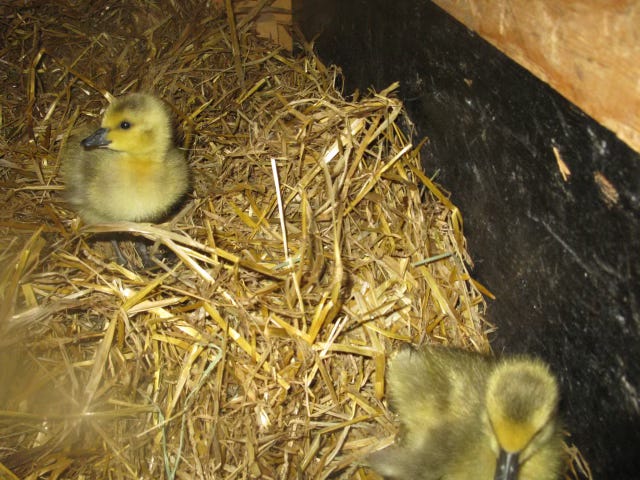
Maverick spent the summer growing into a full-fledged Canada Goose, clearly a male (after a little while of watching and some research).
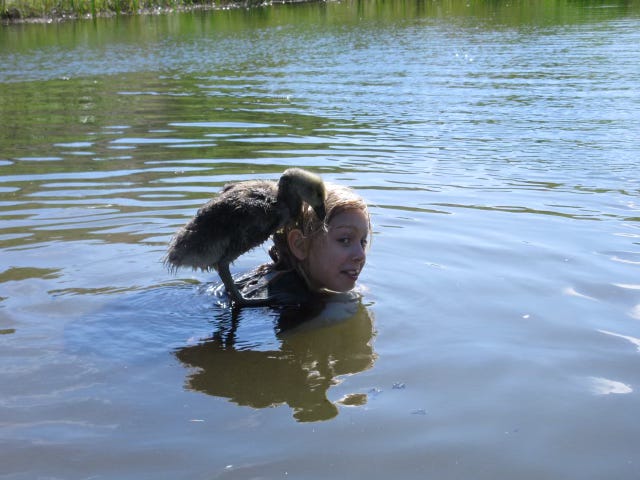
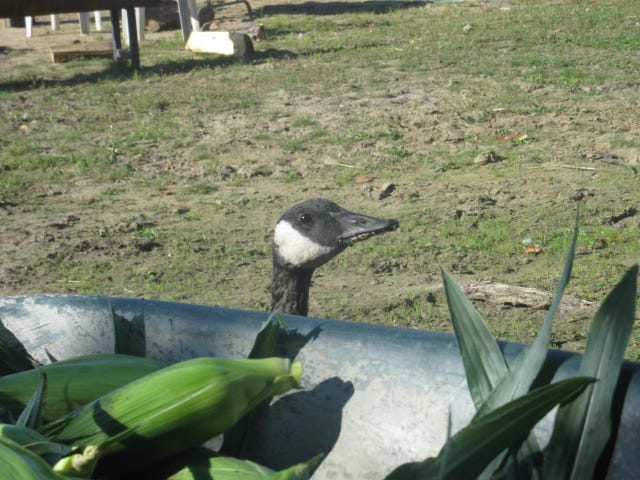
As geese do, he imprinted on our family, and followed all of us around with a pronounced strut. He was at the bottom of the pecking order, but he was definitely planning to work his way up. We had a great time that summer watching a wild thing help us weed the garden (or eat bugs), help us remove all the little protruding screws from our front windows (we actually didn’t ask for that service), and swim in the nearby gravel pits with us on hot days, taking breaks on our kids’ backs. Maverick was quite the character, however at a certain point he decided to try to groom one of our horse’s tails and got a swift kick which definitely broke a leg.
I called the vet, and they were not very helpful. Apparently, the vet “didn’t do poultry,” and anyway, what was I doing raising a wild Canada Goose? I gave up that avenue. Dan and I tried to splint the leg, but there is absolutely no bandage on earth that a motivated goose can’t pull off. We were left with leaving it be, and just trying to keep Maverick contained, which was about as difficult as would be for his namesake.
He was trying to learn to fly, or, more accurately, trying not to. His family didn’t fly, so why should he? However, we could coax him to use those wings by driving up and down our driveway with the windows down. His following instinct got the better of him many times, and sometimes (hilariously) he would take the lead. Driving with a big ol’ Canada Goose flying right in front of your windshield is an interesting experience.
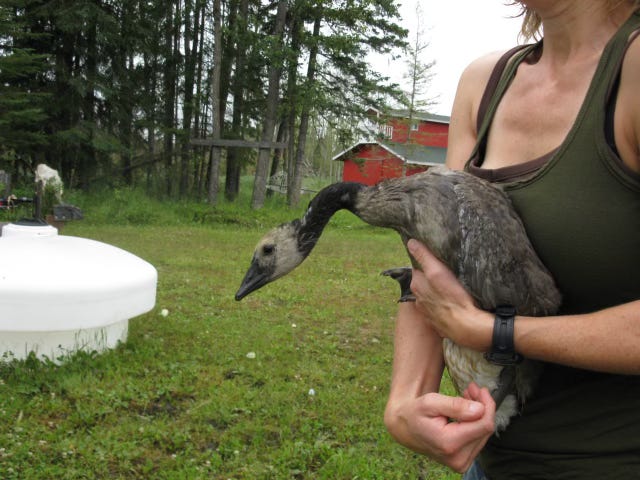
As the summer went on, we tried taking him to the river to see if he could start thinking about other geese. This is only about 2 kms from our house, so he did start to get some wing-strengthening. If we left him there, he would beat us home. Gradually farther trips had the same outcome. However, despite using mirrors to try to let him know he was a goose, not a human, he stayed with us all winter. Hung out under our “bread oven” and (I can’t quite remember) ate oats and probably some dog food.
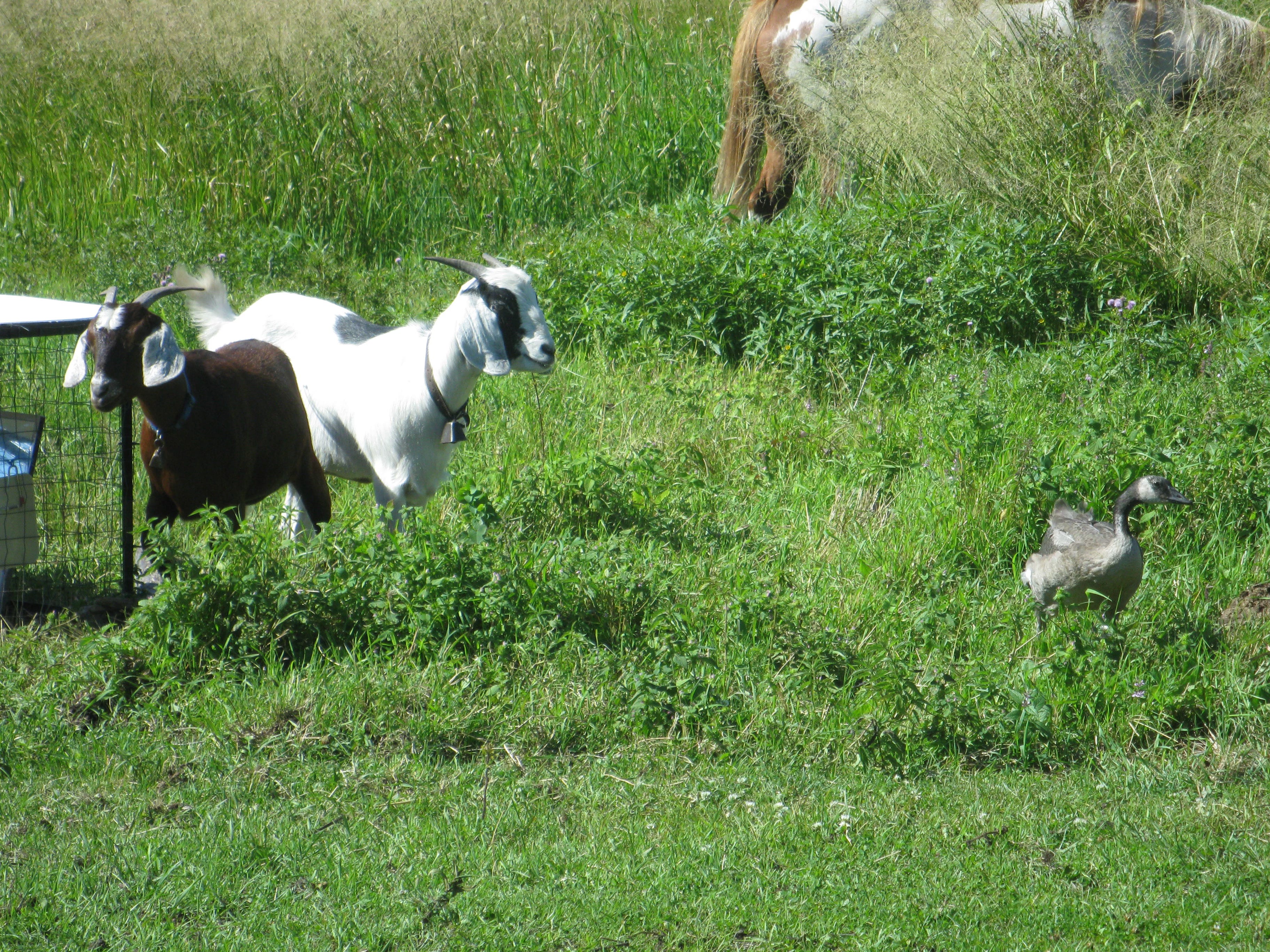
It was almost a whole year later - the next April - when Maverick finally outstayed his welcome. He began to act aggressively towards Heidi, presumably seeing her as next in line and someone to be put in her place. This did not go over well with the rest of us, and we ended up taking him on a very long drive to the South Saskatchewan River, and letting him go, quite dazed and disoriented from spending the trip in a large bucket (with holes) so he wouldn’t break his wings (as we thought he might in a dog crate). I don’t know (of course) what happened to him. It was a sad parting for all of us, and is the whole reason one shouldn’t shelter wildlife. Nevertheless, that summer was pretty miraculous in so many ways.
It happened to also be the first summer we had bred goats (or, we thought they were bred). I spent a memorable weekend home alone with all the animals (and there were quite a few, including our broken-legged goose) just doing a bunch of very mundane tending tasks, while the rest of our household traveled to Alberta for an extended family gathering. I remember those few days as being drenched in oxytocin, in a very calm way that I don’t associate with doing chores while everyone human is also at home. It was July, so sunny, warm, vibrantly coloured, and altogether a holiday for me. (As it turned out, I needn’t have stayed, as none of our goats were pregnant - they were just very fat).
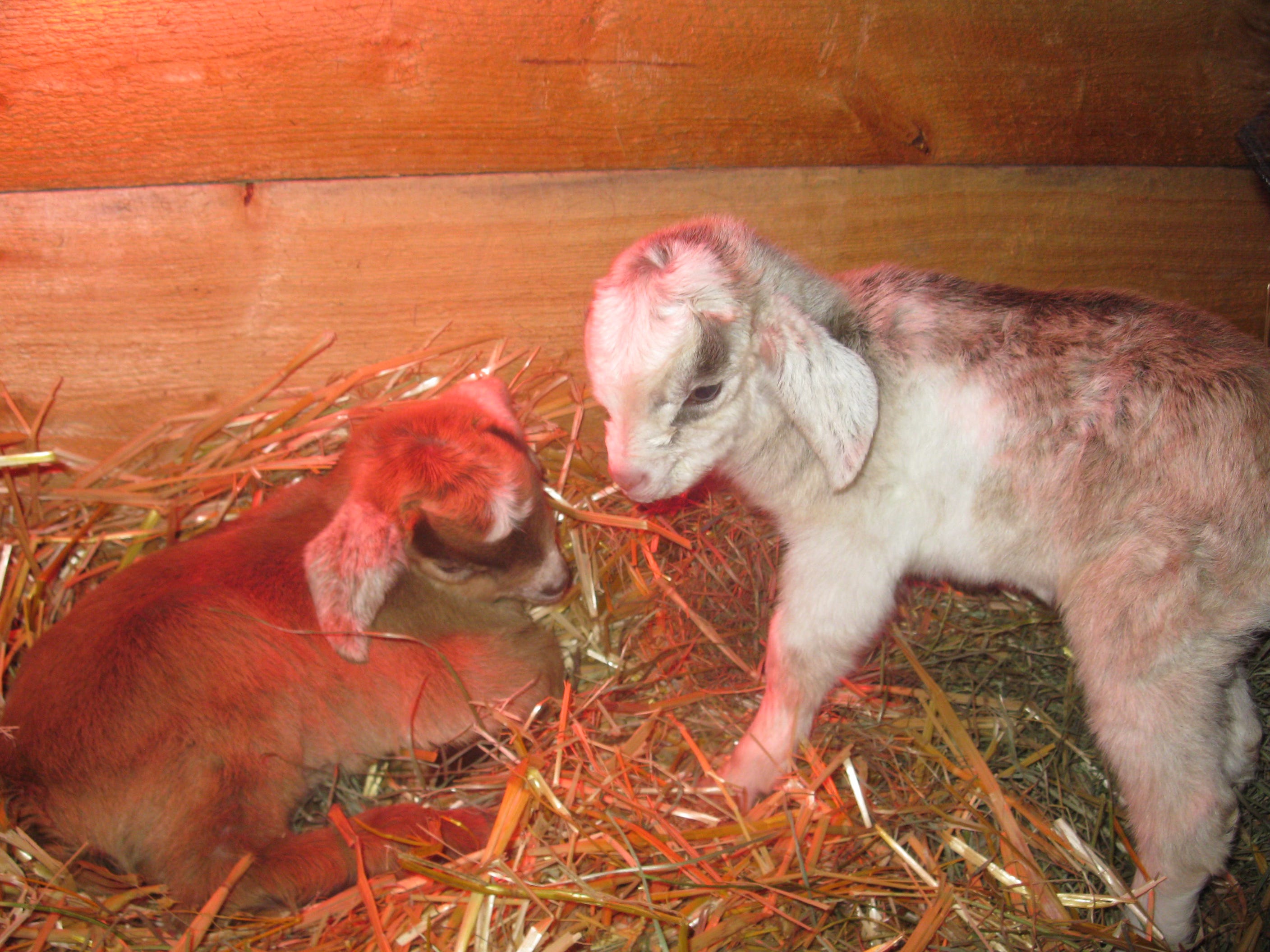
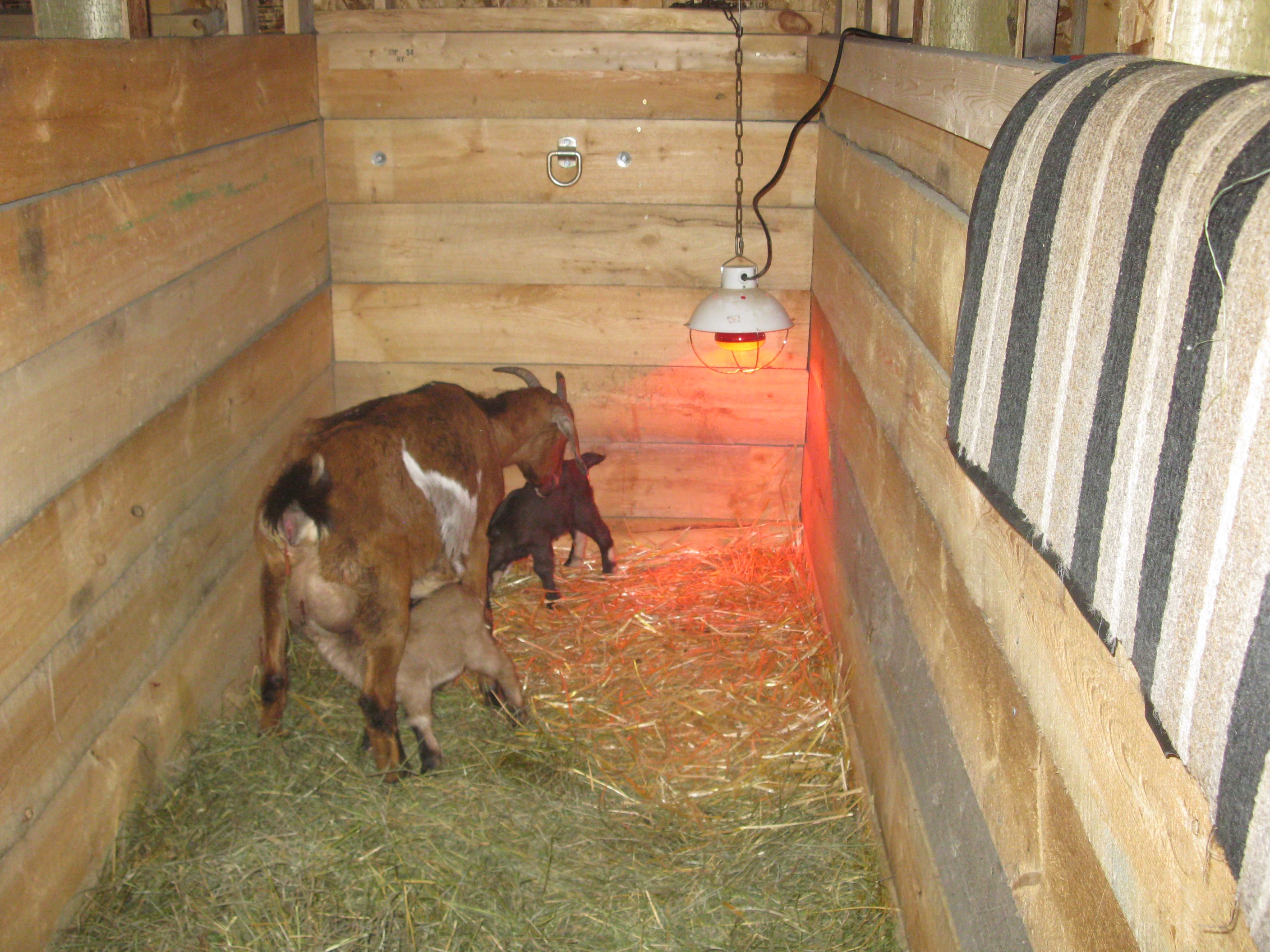
Caring for other beings can be extremely lovely, if one has the resources, and if the outer world is friendly enough to keep the challenges coming only sporadically, not with a machine gun intensity that can’t be managed. In many cases, I (and, I think, our kids, too) have really enjoyed the sensory and chemical effects of bonding with little four and two-legged beings. It’s certain that cuteness helps, but all of us did a lot of middle of (very cold) nights help as mama goats gave birth to twins and triplets, and everyone needed help to get dry, get warmed, and find milk. This was less about cuteness and more about urgent needs of ridiculously improbable little animals. Some of those needs involved letting them struggle to their feet, nuzzle all over their mama’s body trying to find something they had no name for, and letting the mama figure out what to do with this brand new fragrant little being.
Attach. Detach. Stretch the support. Come back in if it’s clear something’s really not working. In all of this, we all experienced the little hitches in our breath, the way our pulses climbed, the empathy of listening to soft exhalations of pain or pleasure (goats are very vocal around birthing). And then, at a certain point, we left the barn, resumed our human day, and had to start, once again, to breathe on our own, for ourselves, and no one else.
So much of what I’m working through, in untangling what was certainly traumatic for me, is that sensation of a bond clicked together in a period of distress. Perhaps it was necessary, and as a caregiver now, I know that not all help is codependent help. But sometimes, an attachment appears that is not so healthy, not necessarily appropriate, maybe not even having to do with care, so much as fear, or a joint escalation in physiology that just happens when people (human and non-) are adjacent to each other and bad things happen.
I’m using this lonely, desert-ish time right now to stand still in the centre (when I think of it) of my limits, and take a careful inventory of linkages I have. Who have I made promises to, and is it time to put down those commitments? What contracts, in the language of Karla McLaren, need to be burnt? And can I handle the pain of letting go of not only a connection (of sorts), but also the hopes and wishes and implied control that hum along in the ways we tie ourselves to each other, to each others’ fates?
Some forms of attachment are good for a while, and then, like nursing an infant, there is a time to move on to the next thing. A good thing, but less close. Less intimate. Less deeply enmeshed. A slow detaching or stretching of what passes for umbilical cords among other relationships, which can feel equally hard to cut.
I notice my breathing these days, and when it is involuntarily syncing with another being’s, and when it is not. Often, I have to encourage myself that I can afford to stay calm while another person (human or non-) escalates. It’s okay to let them feel the growing distance between us as slightly painful. It’s okay for me to stay down here, on the ground floor, ready and able to welcome them home when they make it back.
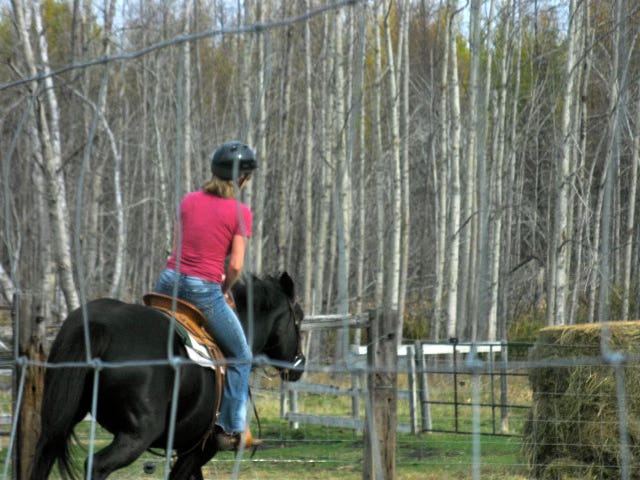
Staying with someone else through all of their ups and downs can be an exercise in empathetic non-attachment; I will hold this part of the world safe for you, but I do not wish to participate in your distress. I am going to breathe for myself.
It’s surprisingly hard to do this, well. It’s like keeping a supply line safe while another person ventures to the front lines. Doesn’t feel brave, but a division of identity and consequent preservation of awareness is, long term, a lot more useful than merging. To everyone involved.
A Monday sort of magic
You probably are holding dozens of implicit connections, even contracts, not to mention relationships where you feel responsible for the other’s safety and wellbeing. It’s a good thing, and certainly how our social net stays functional, even in hard times. However, the length and strength of these links (strong, weak, or in-between) can be revisited now and again. Sometimes a bond does better by becoming closer and tighter, and at other times it’s good for everyone to loosen the hold.
Please feel encouraged to allow yourself space, time, and emotional latitude to consider each of your supporting and supportive connections with other people (human or non-). Occasionally, you may find that you are breathing in sync with someone who might not actually need you to be that joined up, that close, that invested. It’s one hard thing to face this squarely, and start to let your whole physiology uncouple from another’s. In my experience, there is some pain.
However, sometimes (often), this letting go allows for more deep breathing on both individuals’ parts. Like standing too close in conversation, moving back a bit can often give each partner a better view of the larger context, and the others’ full range of possible responses to that context.
Intuitively, we know we need to let our kids grow and go, let the animals follow their instincts (despite how much help they appear to need or want), and also let our close friends and deeply loved ones choose their own responses, their own paths. It’s a particular brand of magic, of love, to give this slackness in the rope to another being, even when they may do something stupid, or hurtful, or unexpected with that freedom. I personally find it really, really difficult. But I’m trying to breathe on my own, whenever and wherever possible, even though the empathy comes naturally.
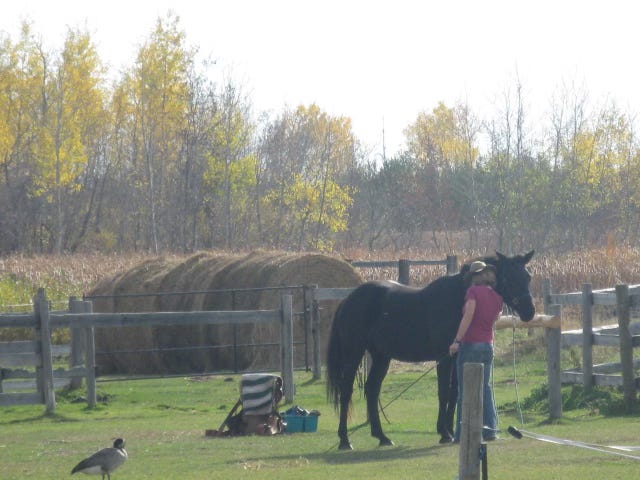
A loose leash, a loose lead, a gentle handclasp, a reduction in urgency in general, are all good ways to open a Monday. We are together, but we each have room to breathe.
Loved this! I too have a history of unconsciously synchronizing my breathing with those I care for. I first realized I was doing it in my 20s. Each decade, Ive gotten a little better at noticing sooner when I do it, and reclaiming my breath, but I still do it. Wonder if we all do it, or just "sensitive" types. No wonder I need so much solitude!